A guided skincare storefront that builds a routine in five taps
- Finder questions
- 5
- Store themes
- 4
- Client
- lumēa
- Industry
- E-commerce and beauty
- Location
- Online store
- When
- October 2026, in progress
The number that matters
Skin Finder completions that end in a routine in the cart
Baseline
Not yet recorded. We publish it only from the client's own data.
lumēa sells skincare online. WebMarv is designing a store with a five-question Skin Finder, an ingredient guide, ready-made routine bundles, product pages and a short checkout. The same design is being extended to three more store themes: menswear, womenswear and furniture. The project is at the design stage and no results are reported yet.
The brief
What they needed.
Skincare shoppers face rows of similar products and ingredient lists they do not understand. Many leave without buying, or buy one product that does not fit. A store that asks a few easy questions and explains each choice can guide them to a routine they trust.
- Help a shopper find a routine in about five taps
- Explain every ingredient in plain words
- Offer routine bundles so the basket grows
- Keep checkout short on a phone
What we are building
What WebMarv is building for lumēa.
- 01
Skin Finder
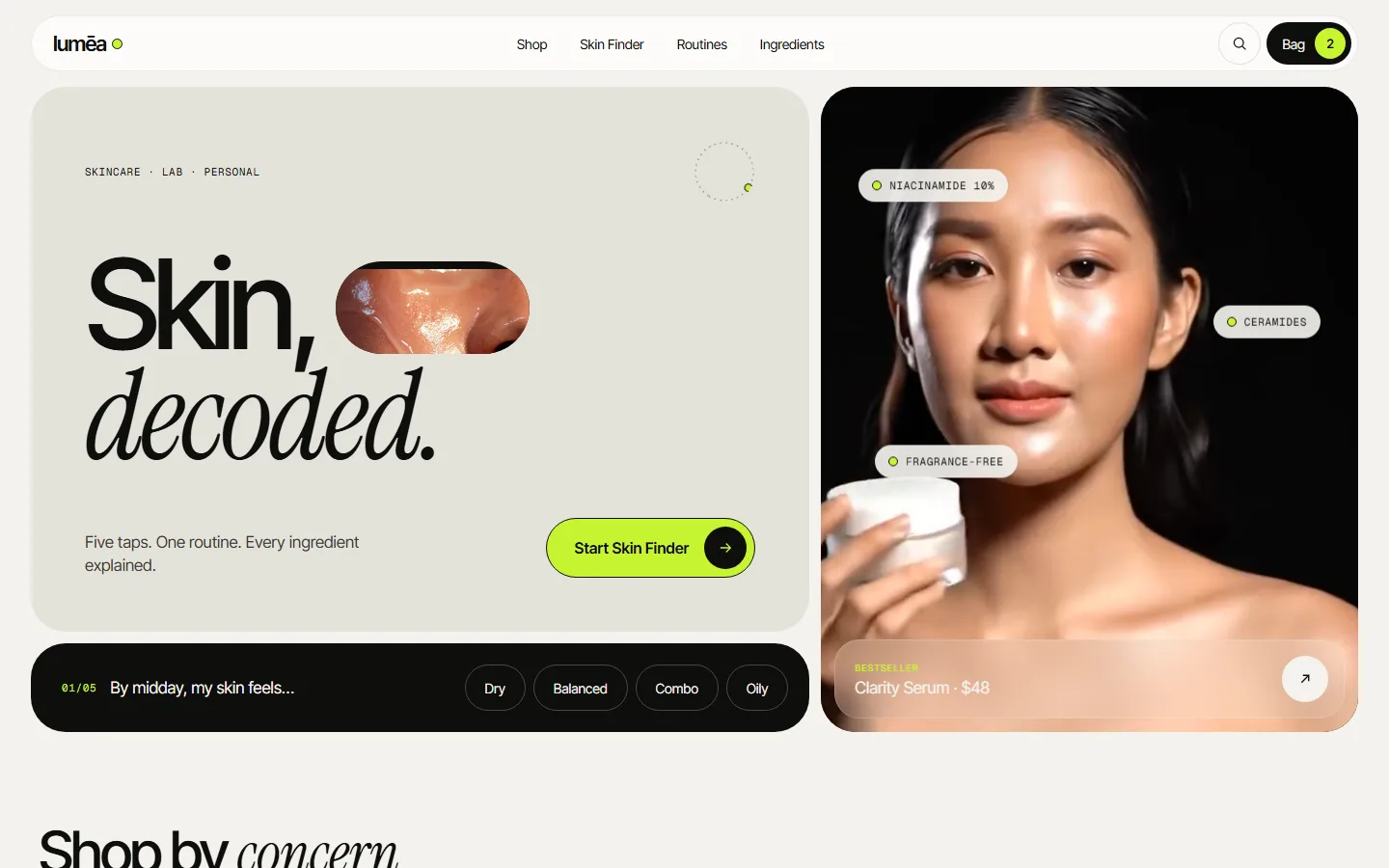
Five questions on skin type, goal, sensitivity, routine size and timing, ending in a routine with reasons.
- 02
Ingredient guide
Tap an ingredient to see what it does and what not to mix it with.
- 03
Routine bundles
Products grouped into ready routines with a bundle price.
- 04
Product pages
Clear pages for each product, built to be found by search.
- 05
A short checkout
A few steps that work with one thumb.
- 06
Three more store themes
The same system adapted for menswear, womenswear and furniture stores.
The design
How it looks and works. Select a screen to open it full size.
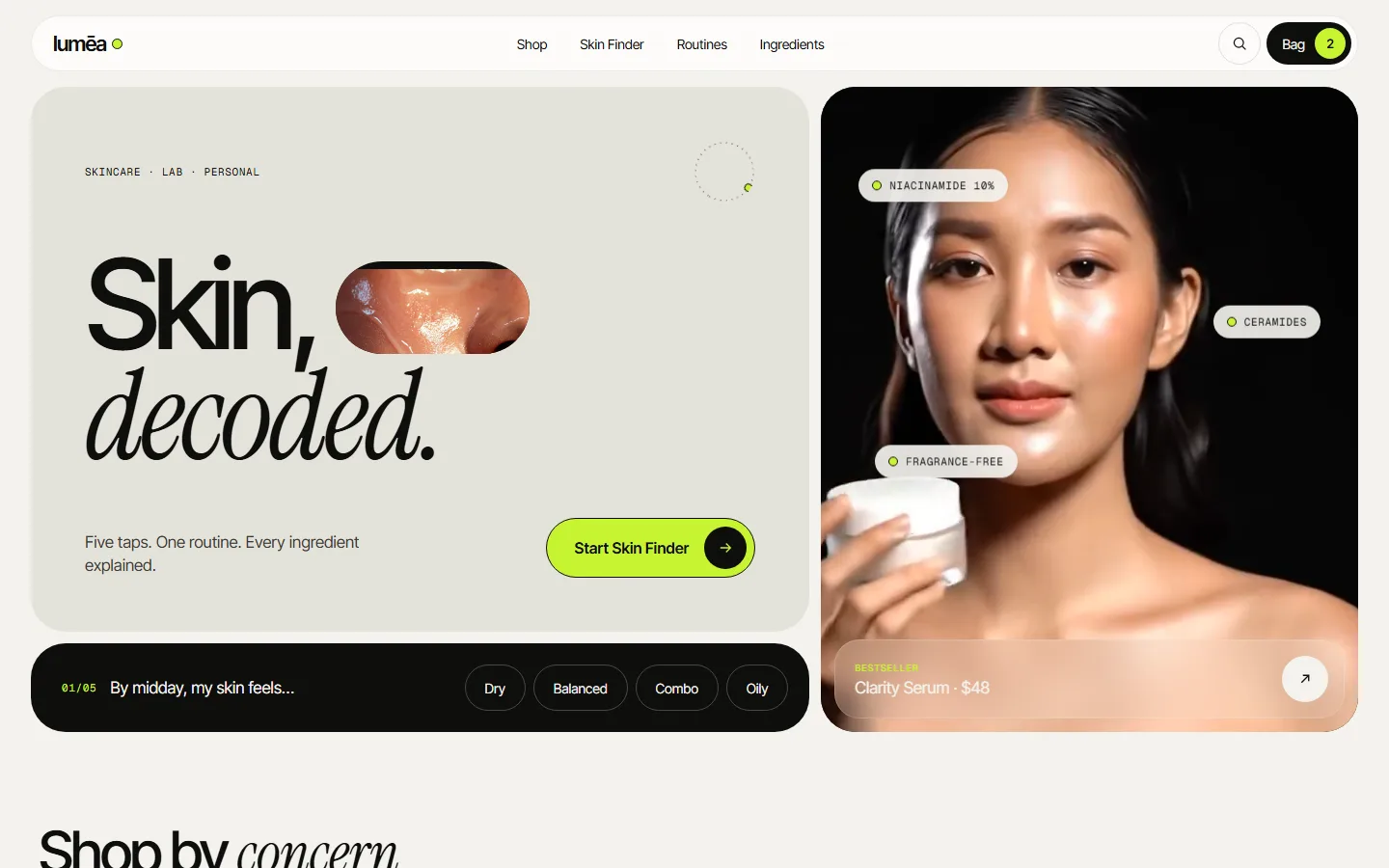
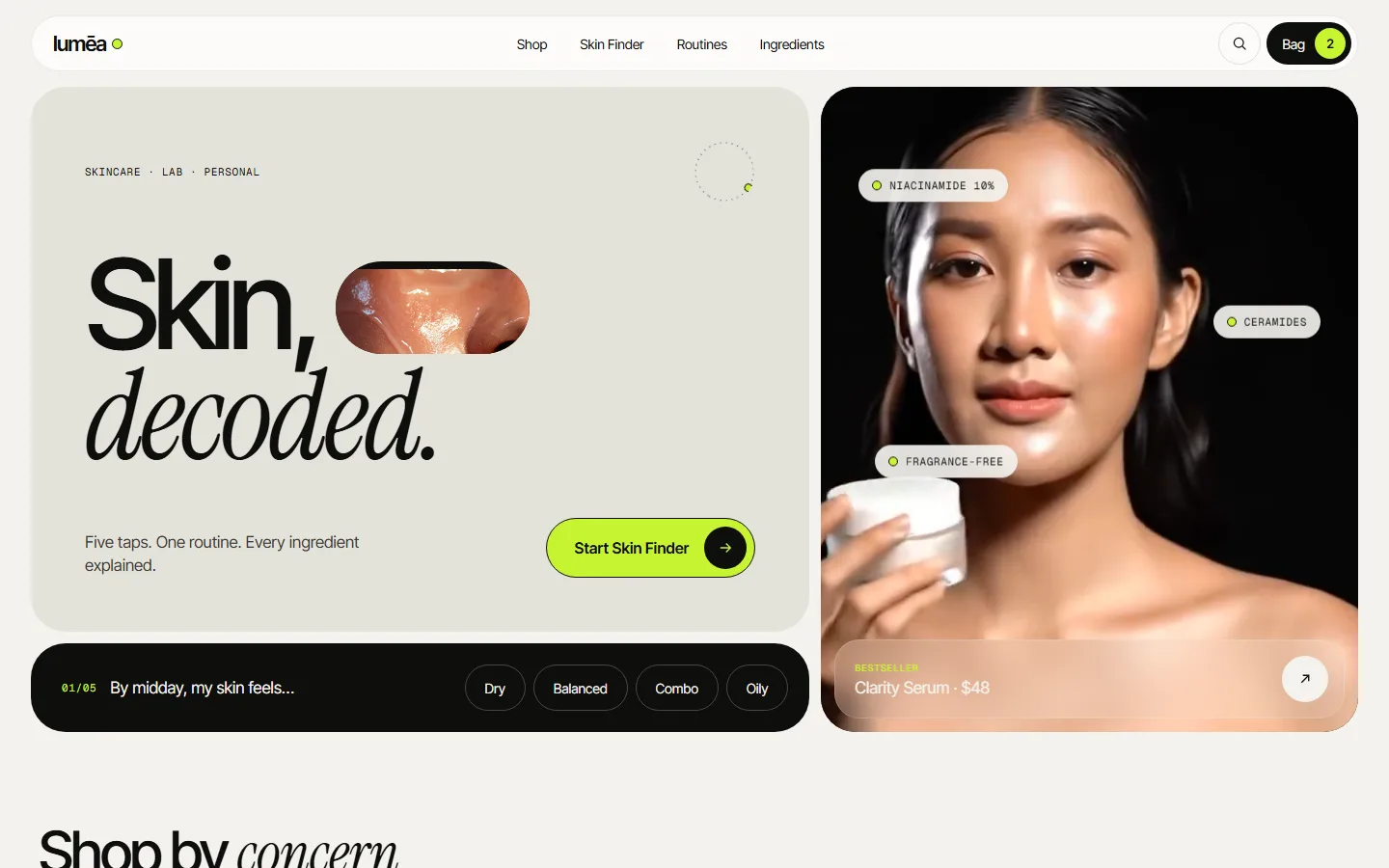
Home page with the Skin Finder. Design screen. Text, prices and figures in the design are sample content. 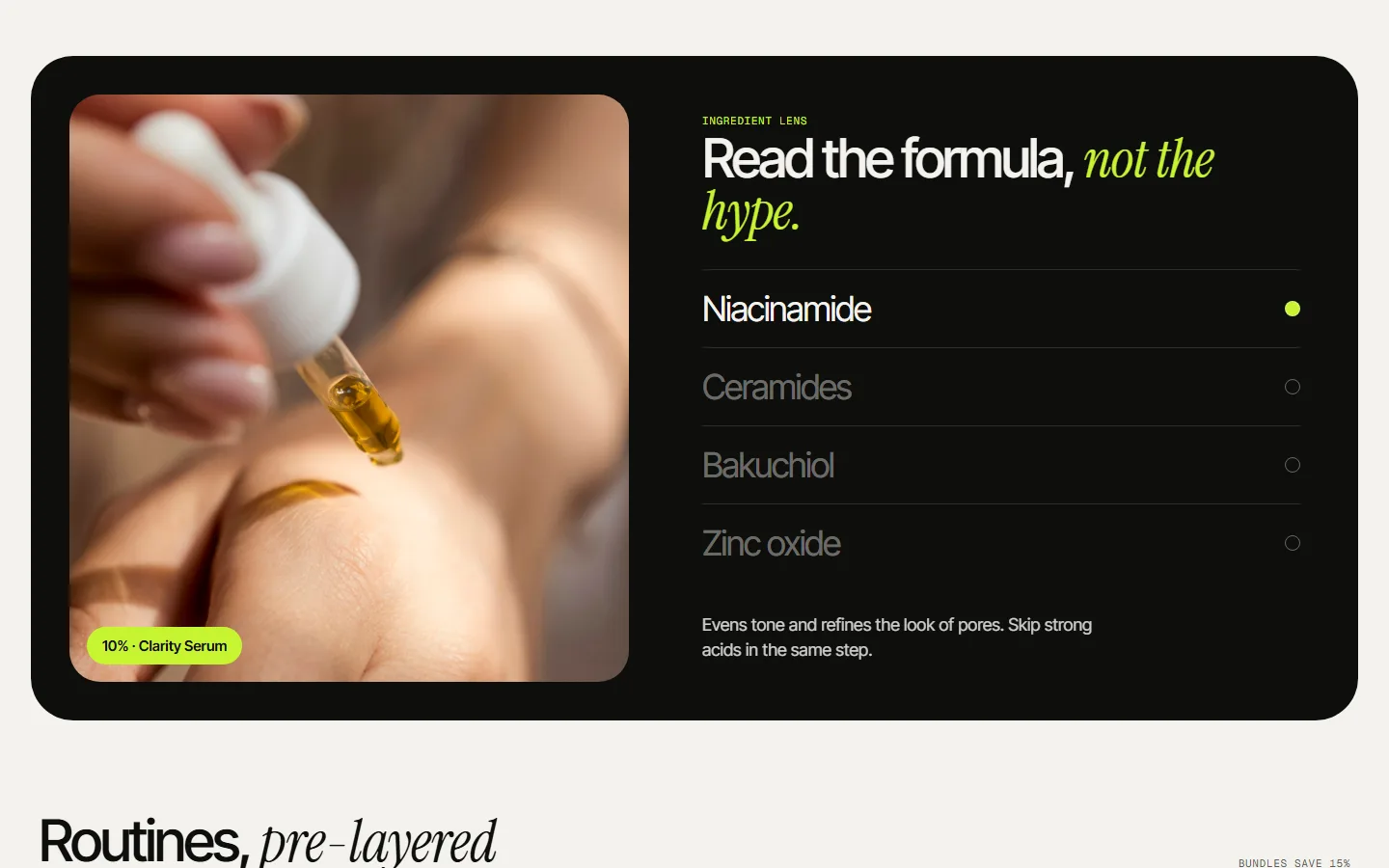
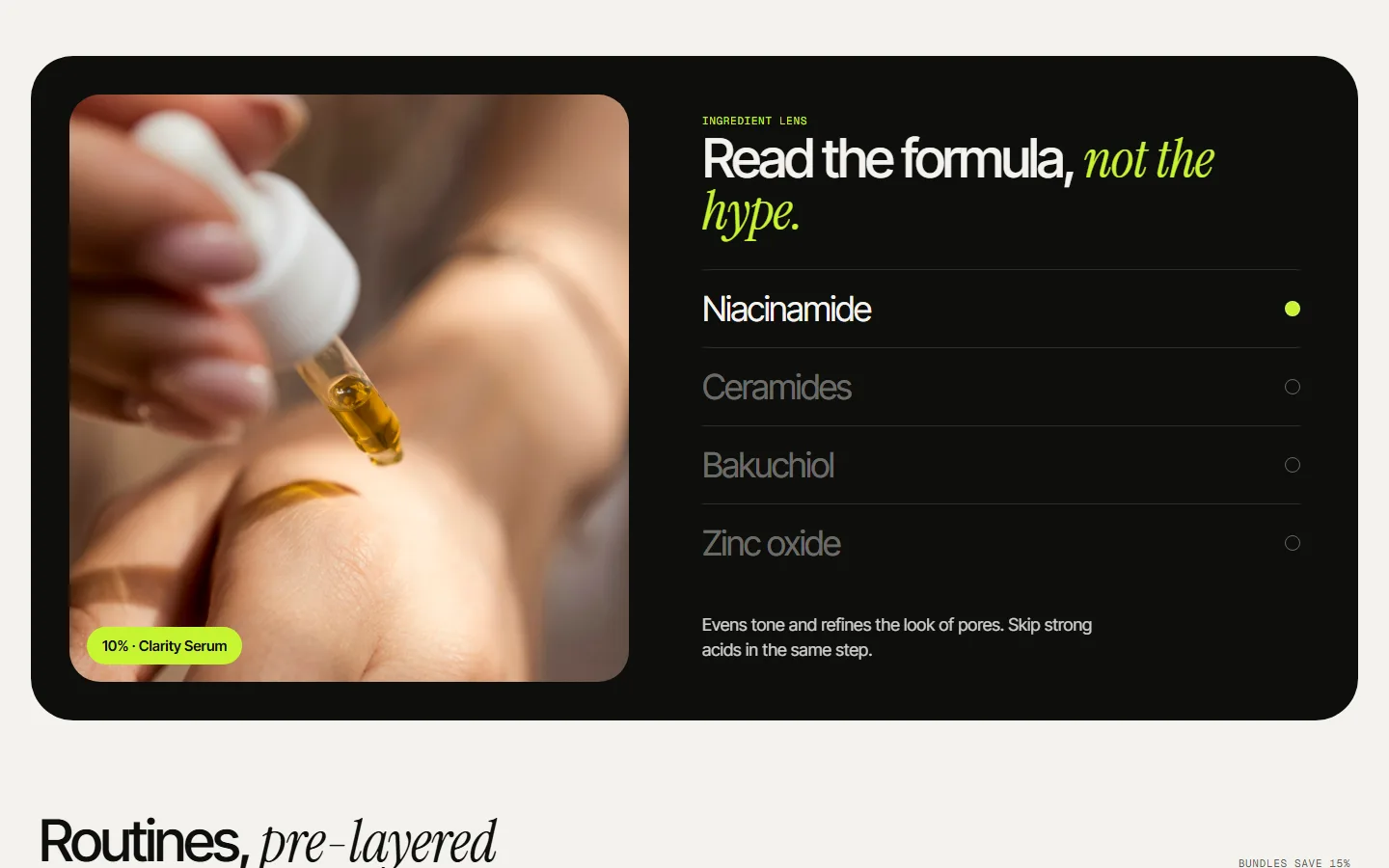
Ingredient guide. Design screen. Text, prices and figures in the design are sample content. 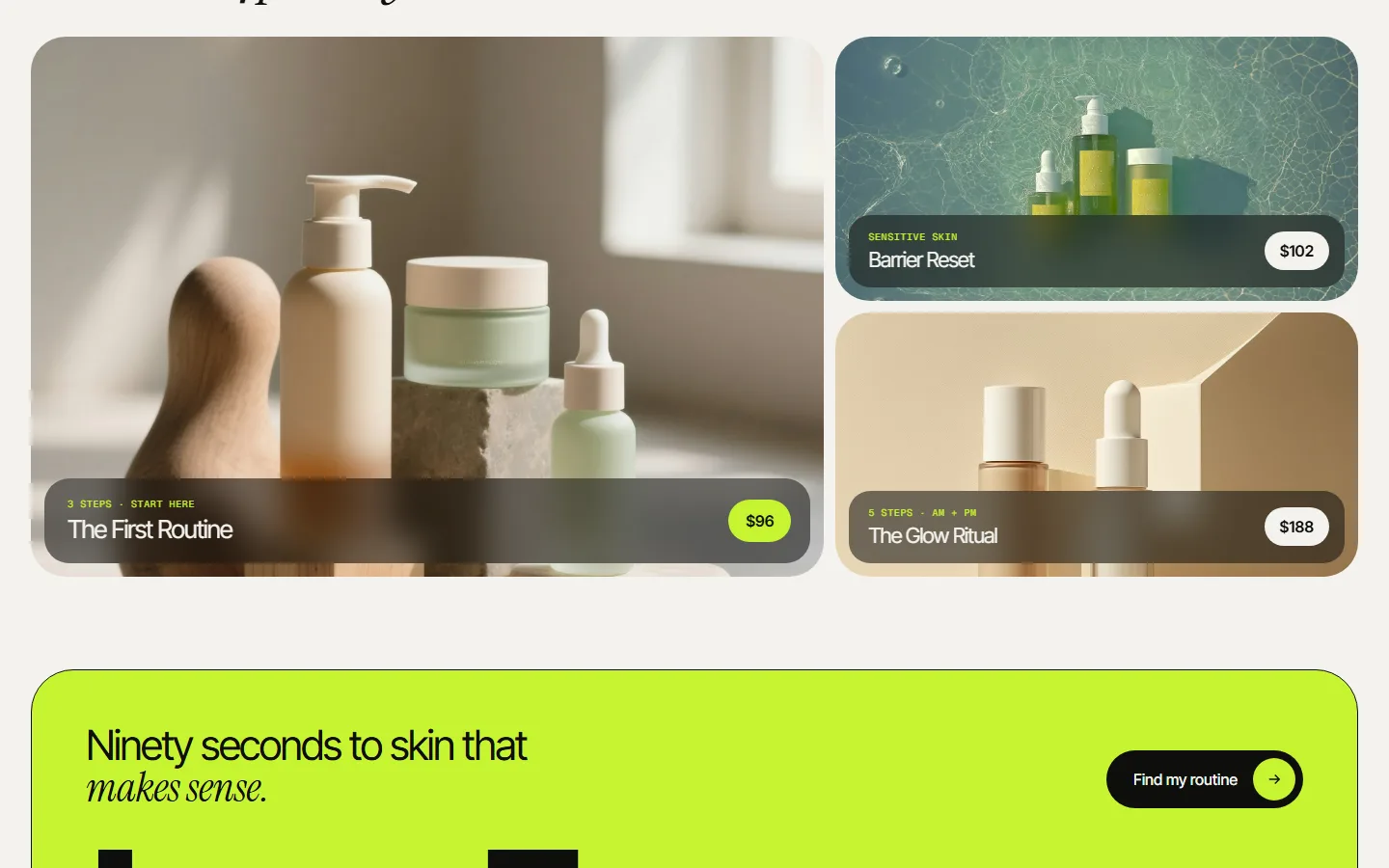
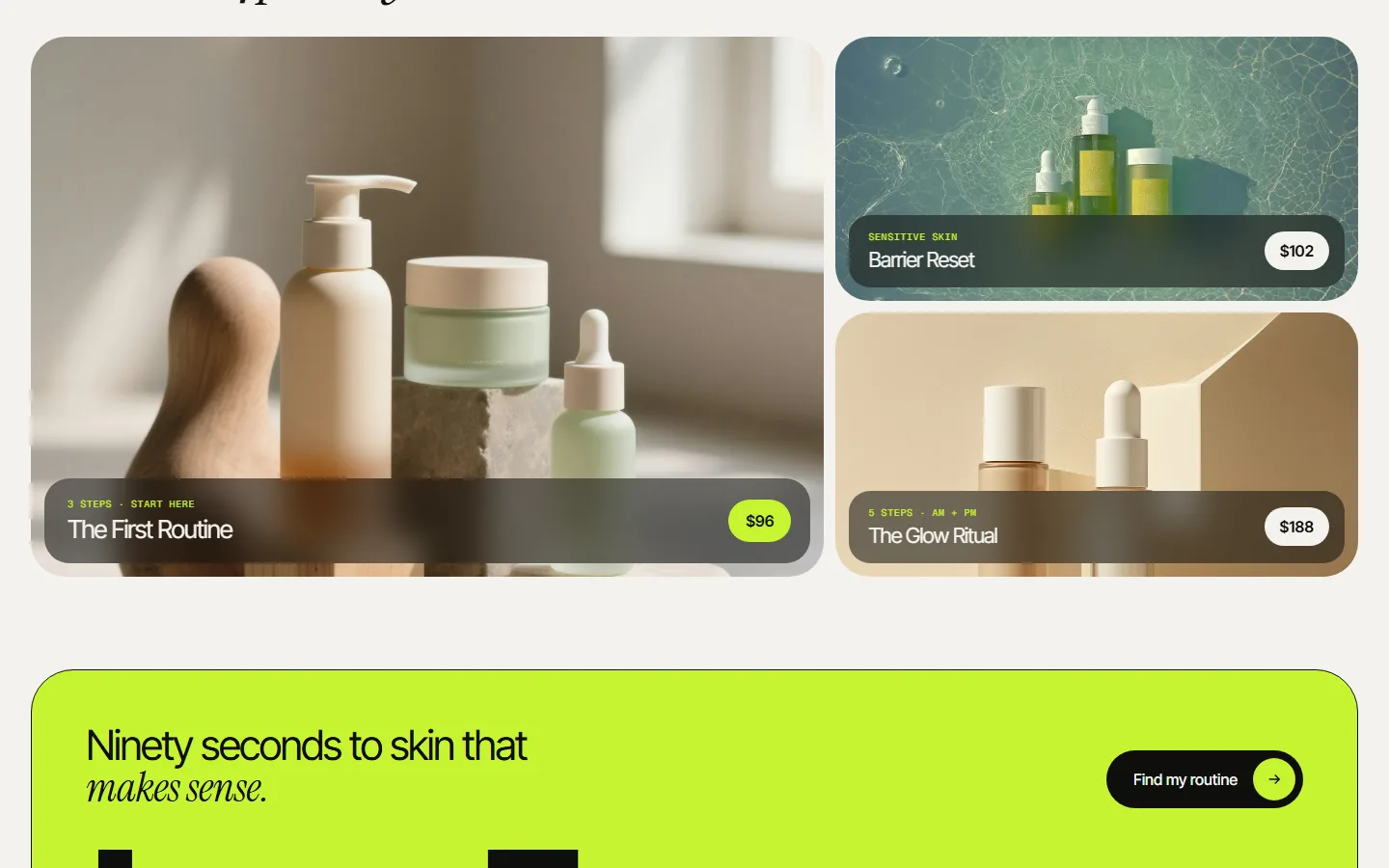
Routine bundles. Design screen. Text, prices and figures in the design are sample content. 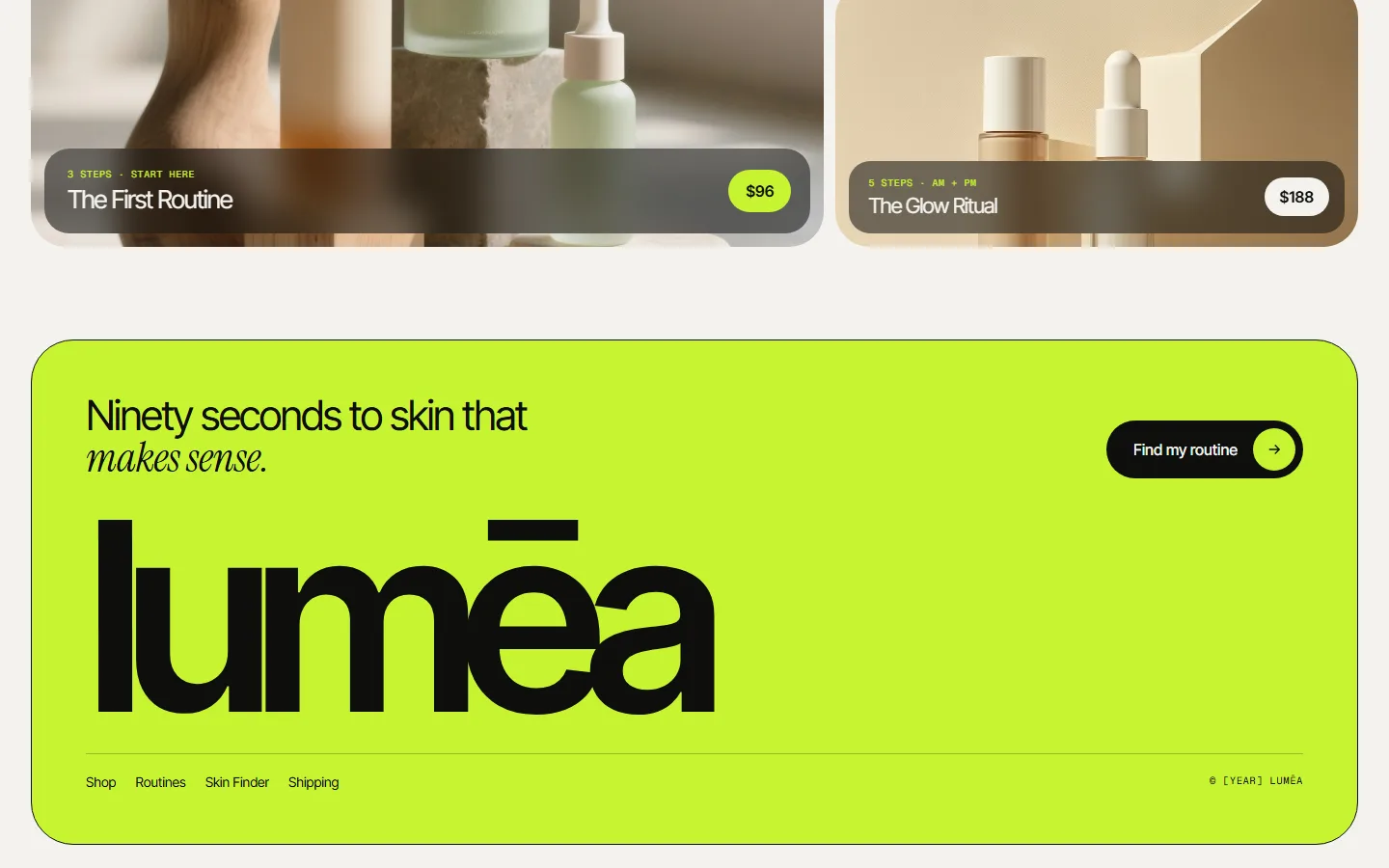
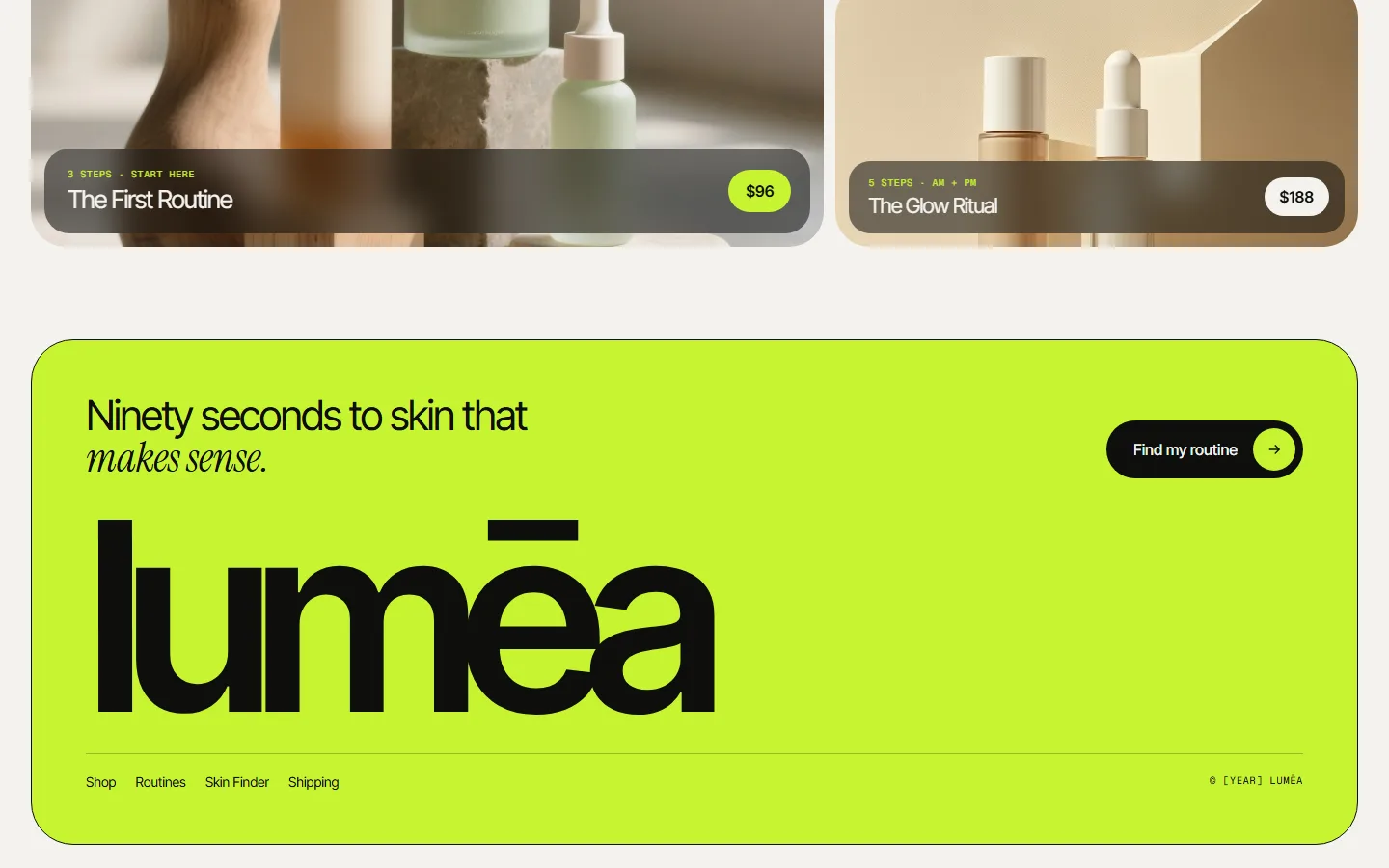
A closing prompt to start the Skin Finder. Design screen. Text, prices and figures in the design are sample content.
How it works
How we are doing it. Step by step.
- 01
Start from the shopper's doubt
Which product, in what order, and is it right for my skin?
- 02
Ask, then recommend
Five easy questions lead to a routine with a reason for each product.
- 03
Explain, do not claim
Ingredient pages say what each does in plain words.
- 04
Make the basket easy
Bundles and a short checkout, designed phone first.
Project status
Where the project stands. Updated as each stage finishes.
- 01 · DONE
Strategy and design
The skincare store is designed for laptop and phone, with three more themes drawn from the same system.
- 02 · UPCOMING
Build
The approved design is built as a fast, search-ready site or app.
- 03 · UPCOMING
Launch
Go live, with analytics and enquiry tracking switched on from day one.
- 04 · UPCOMING
Measure and improve
Report results from real data, then improve the pages and steps that matter.
For the business
What this means for the business. In plain words.
Fewer lost shoppers
A shopper who is unsure gets a clear next step, instead of leaving to search elsewhere.
A bigger basket
The finder ends in a whole routine, with a bundle price beside it.
Trust through plain words
Ingredient explanations reduce doubt and the need to ask support.
One system, four stores
The same design adapts to menswear, womenswear and furniture, so growing the brand does not mean starting over.
Results we track for this client
- Skin Finder completions and routines added to the bagStore analytics
- Orders and average basket sizeThe store's own order records
- Searches for products and ingredients that show the storeGoogle Search Console
We publish a number here only after it comes from the source shown. Until then, no result is claimed.
Playbook
How to do this for your own e-commerce and beauty business. For an online skincare or beauty brand that wants shoppers to find the right products, not just browse.
What people search for
| Search | Per month | What it means for the build |
|---|---|---|
| vitamin c serum | 2,46,000 | Huge and crowded with big brands. Not a place for a new store to start. |
| niacinamide serum | 2,01,000 | Same. Ingredient searches are where shoppers begin, so the ingredient guide should answer them honestly. |
| moisturiser for dry skin | 1,35,000 | Skin-type intent. A finder that asks about skin type meets it directly. |
| sunscreen for oily skin | 1,10,000 | A skin-type question with a product answer. |
| skincare routine for oily skin | 4,400 | Smaller and more winnable. A routine page with reasons fits. |
| retinol for beginners | 1,300 | Shoppers want safety advice before buying. |
| skin type quiz | 260 | Tiny, but shows people want a guided answer. |
Estimated monthly Google searches in India, pulled 4 Nov 2026 with OpenSEO (DataForSEO). Estimates, not promises.
How the build is organised
- Pages
- Home, Skin Finder, routine pages, ingredient guide, product pages, bundles, cart and a short checkout.
- Guided selling
- Five questions (skin type, goal, sensitivity, routine size, timing) end in a routine with a reason for each product.
- Search set-up
- One page per ingredient and per routine, each answering one question. Product pages list ingredients as text, not images.
- Structured data
- Product details with price and availability, and FAQ markup on ingredient pages.
- Tracking
- Finder completed, routine added to cart, bundle bought. These show whether guidance sells more than browsing.
Technical and design decisions, and what they cost
A product filter or a guided finder?
A guided finder, with filters kept for people who know what they want.
Shoppers who do not know their skin type cannot filter well. The risk is that some skip the quiz, so the shop stays browsable.
Sell single products or routines?
Both, with bundles shown beside the cart.
A routine solves the shopper's real problem. A bundle price gives a reason to add the rest.
Ingredient advice inside product tabs or on its own pages?
Its own pages.
Standalone pages can be found by search and linked from products. They need medical-safe wording, so keep claims modest.
A checklist you can reuse
- Ask the questions a good shop assistant would ask, in the same order.
- End the quiz with a routine and say why each product is in it.
- Write ingredient pages in plain words, including what not to mix.
- Keep product ingredient lists as text so search engines can read them.
- Avoid cure or treatment claims. Describe what an ingredient does, not what it fixes.
- Show a bundle price next to the cart, not buried on a separate page.
- Track quiz completion and routine purchases separately from plain visits.
This is the approach for this build, not a result. Results are added to this page only when they come from the client's own records, Search Console or analytics.
The math
How the result is worked out. Not just 'revenue went up'.
Sessions × finder completion rate × routine-to-cart rate × average order value × margin = contribution from guided selling.
| Input | Where it comes from | Value |
|---|---|---|
| Sessions, finder completions, routines added to cart | Google Analytics 4 | Not yet measured |
| Orders and average order value | The store's order data | Not yet measured |
| Product margin | The client's own records | Not yet measured |
A value is added here only when it comes from the client's own records, Search Console or analytics.
The outcome
Where it stands.
This project is in progress. WebMarv has not published results for it. A result is added here only when it comes from the source shown above.
Questions
Frequently Asked Questions. Clear facts regarding our work for lumēa.
What is WebMarv building for lumēa?+
An online skincare store with a five-question Skin Finder, an ingredient guide, routine bundles and a short checkout. It is at the design stage.
How does a guided finder help an online store?+
It answers the shopper's biggest doubt, which product fits, and turns one visit into a routine. We will report the effect only from the store's own data.
How much does an online store cost?+
Websites and online stores start from ₹80,000. The price depends on products, features and payment setup, and you get a fixed written quote after a free audit.
Are there results to share?+
This project is in progress. WebMarv has not published results for it. A result is added here only when it comes from the source shown above.
Services used
Want similar engineering for your business? These are the disciplines behind this build.
Website Development
A website development company designs and builds websites and web apps. WebMarv builds company websites, web apps, portals, online stores and SaaS platforms that load fast, rank on Google and turn visitors into customers.
Website Conversion & CRM
Conversion rate optimization (CRO) services find where visitors and leads drop off, then fix pages, follow-up and CRM so more of them buy. WebMarv covers the whole path from first visit to repeat customer.
SEO Services
Technical, on-page and programmatic SEO fixes how your site is built and written so it can rank higher on Google and be cited in AI Overviews. WebMarv checks what blocks crawling, maps what buyers search for, and publishes pages for those searches, with a monthly report.
Want similar results for your business?
Slow pages and untracked enquiries cost you customers. Book a free 30-minute audit to find your biggest search and sales leaks.